Judul : TeamLab Borderless: A Million+ Immersed in Art
link : TeamLab Borderless: A Million+ Immersed in Art
TeamLab Borderless: A Million+ Immersed in Art
TeamLab Borderless, the expansive digital art museum nestled within Tokyo's Azabudai Hills complex, recently celebrated its first anniversary, marking a year of extraordinary success and global recognition. Since its opening in February of last year, the museum has welcomed an astounding 1.55 million visitors, with a significant 65% hailing from international destinations. This impressive feat underscores the museum's universal appeal and its position as a must-see attraction for tourists from around the globe. Further solidifying its status as a world-class destination, TeamLab Borderless was recognized by Time magazine in July as one of the "World's 100 Greatest Places (including hotels)." But what is it about this unique space that captivates so many?
TeamLab, the innovative Japanese art collective behind the museum, was founded in 2001 by Inoko Toshiyuki. The group has gained international acclaim for its immersive exhibitions that seamlessly blend art and technology, creating experiences that transcend traditional artistic boundaries. TeamLab's first permanent exhibition, also named TeamLab Borderless, opened in Odaiba, Tokyo, in 2018. Following its success, the exhibition was relocated to the larger Azabudai Hills location, offering visitors an even more enhanced and captivating experience.
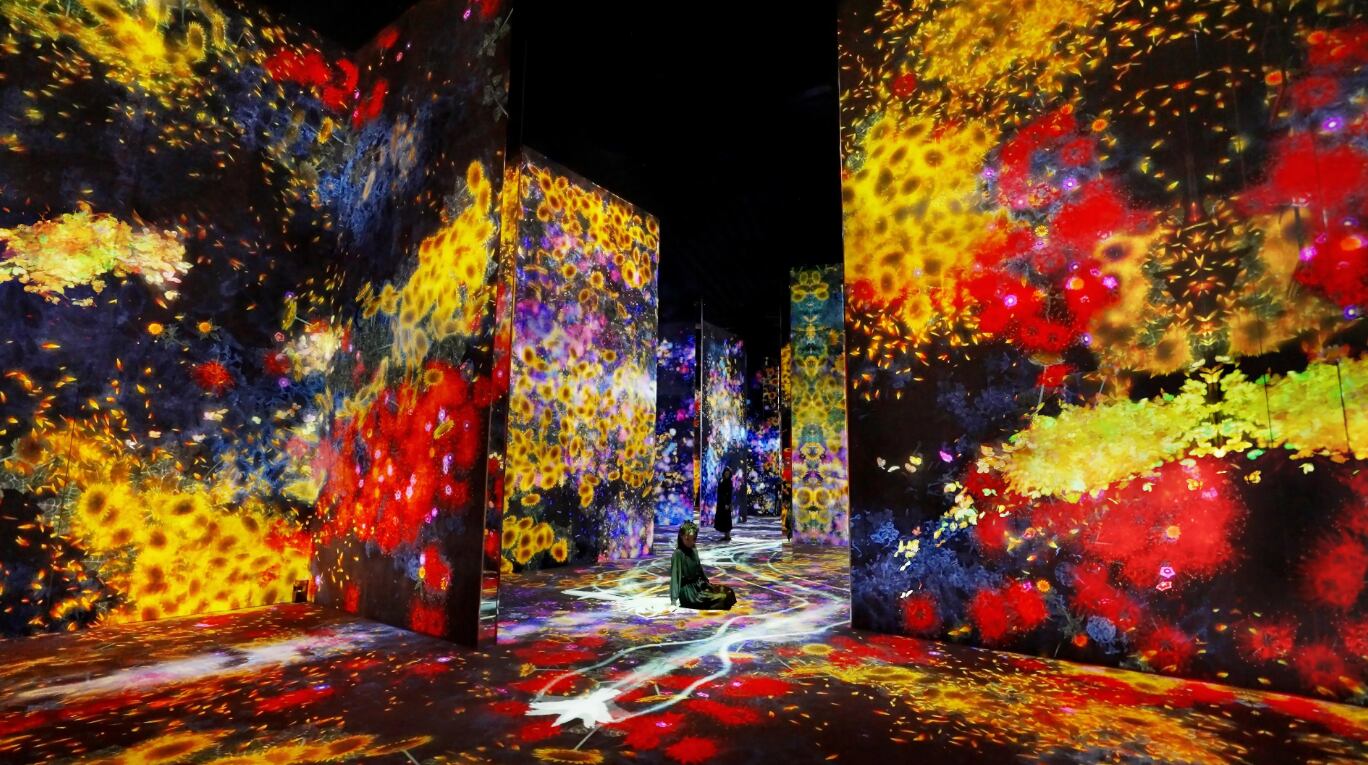
The concept of "Borderless" is central to TeamLab's artistic vision. It represents the dismantling of barriers between physical space, individual artworks, and the audience. This philosophy is brought to life through interactive installations that encourage visitors to engage with the art in a dynamic and personal way. Another TeamLab venue, TeamLab Planets in Toyosu, embodies the concept of making "the body becomes like a planet." This is achieved through the innovative use of water and light, which are integral components of the exhibits, creating a truly immersive and transformative experience.
Following the initial success of TeamLab Borderless in Odaiba, TeamLab has expanded its presence both domestically and internationally. Currently, the art collective operates 11 venues across Japan and 9 overseas. A particularly noteworthy example is TeamLab Phenomena, which opened in Abu Dhabi in April. This massive venue spans an impressive 17,000 square meters, exceeding the combined area of six halls at Seoul Arts Center's Hanaram Art Museum, demonstrating the scale and ambition of TeamLab's international projects.
In October, TeamLab Bio Vortex opened its doors in Kyoto, becoming the largest TeamLab venue in Japan with a sprawling 10,000 square meters. The name "Bio Vortex" reflects the exhibition's focus on life ("Bio") and the dynamic, swirling energy of a whirlpool ("Vortex"). The venue features immersive spaces that can induce a sense of disorientation, with one particular corner even suggesting that visitors lie down to fully appreciate the experience. Located southeast of Kyoto Station, TeamLab Bio Vortex is somewhat removed from the city's traditional tourist hotspots. This deliberate distance may contribute to its family-friendly atmosphere and design.
The "Forest of Movement" within TeamLab Bio Vortex, for instance, incorporates features such as a bouncy floor and aerial bridges, creating an environment that evokes a cosmic sense of wonder and exploration. Another dedicated space, the "Let's Learn! Future Amusement Park," encourages children to actively participate and learn through interactive installations that respond to simple actions like drawing or placing objects. This encourages collaboration and the discovery of fundamental rules, reflecting TeamLab's intention to appeal to a broad audience, including families with young children.
One might question whether viewing TeamLab's work online through platforms like YouTube is sufficient to truly appreciate the art. To address this point, it's helpful to consider a statement from the Mauritshuis Museum in the Netherlands, renowned for its iconic painting, Girl with a Pearl Earring: "'Girl with a Pearl Earring' appears on mugs and umbrellas in your home. But seeing the original is entirely different. Emotional reactions are over ten times stronger when viewing the actual artwork. This is because the brain's ‘value judgment system’ and the part connecting ‘emotion and information’ are far more stimulated by real art." This sentiment highlights the irreplaceable value of experiencing art in person, where the emotional and intellectual impact is significantly amplified.
The convergence of business and art is not a new phenomenon. For instance, LG Electronics launched the Art Dios kitchen appliance series in 2006, integrating fine art into its product design. Similarly, the eyewear brand Gentle Monster has transformed its retail stores into immersive artistic spaces. TeamLab itself has engaged in collaborations, including a partnership with Samsung Galaxy since 2022, which involves operating an exhibition space at Galaxy Harajuku. These examples illustrate the growing trend of incorporating art into various industries, with a particular emphasis on creating immersive offline experiences. The integration of art serves to enhance the overall impact, as evidenced by the unique atmospheres of Gentle Monster stores and Galaxy Harajuku.

Thus the article TeamLab Borderless: A Million+ Immersed in Art
You are now reading the article TeamLab Borderless: A Million+ Immersed in Art with the link addresshttps://www.unionhotel.us/2025/10/teamlab-borderless-million-immersed-in.html
0 Response to "TeamLab Borderless: A Million+ Immersed in Art"
Post a Comment