Judul : Foreign Investors Exit South Korean Bond Market
link : Foreign Investors Exit South Korean Bond Market
Foreign Investors Exit South Korean Bond Market
"Our house believes that the Bank of Korea's (BOK) rate reductions have already concluded at 2.5%," Citigroup.
"There were numerous indications that the BOK might not reduce interest rates, but Governor Rhee Chang-yong of the BOK firmly established a clear path toward the conclusion of the rate-cutting period," said a foreign bond manager.
International investors are withdrawing from the South Korean bond market. According to data from the Korea Exchange on the 13th, foreign entities have sold approximately 2.65 trillion South Korean won in 10-year government bond futures, which serve as a key indicator for South Korean government bonds, since the beginning of this month. On the 12th, the 10-year yield reached 3.3% during trading before ending at 3.282%, setting a new yearly peak, while the 3-year yield also closed at 2.923%, surpassing its annual high.
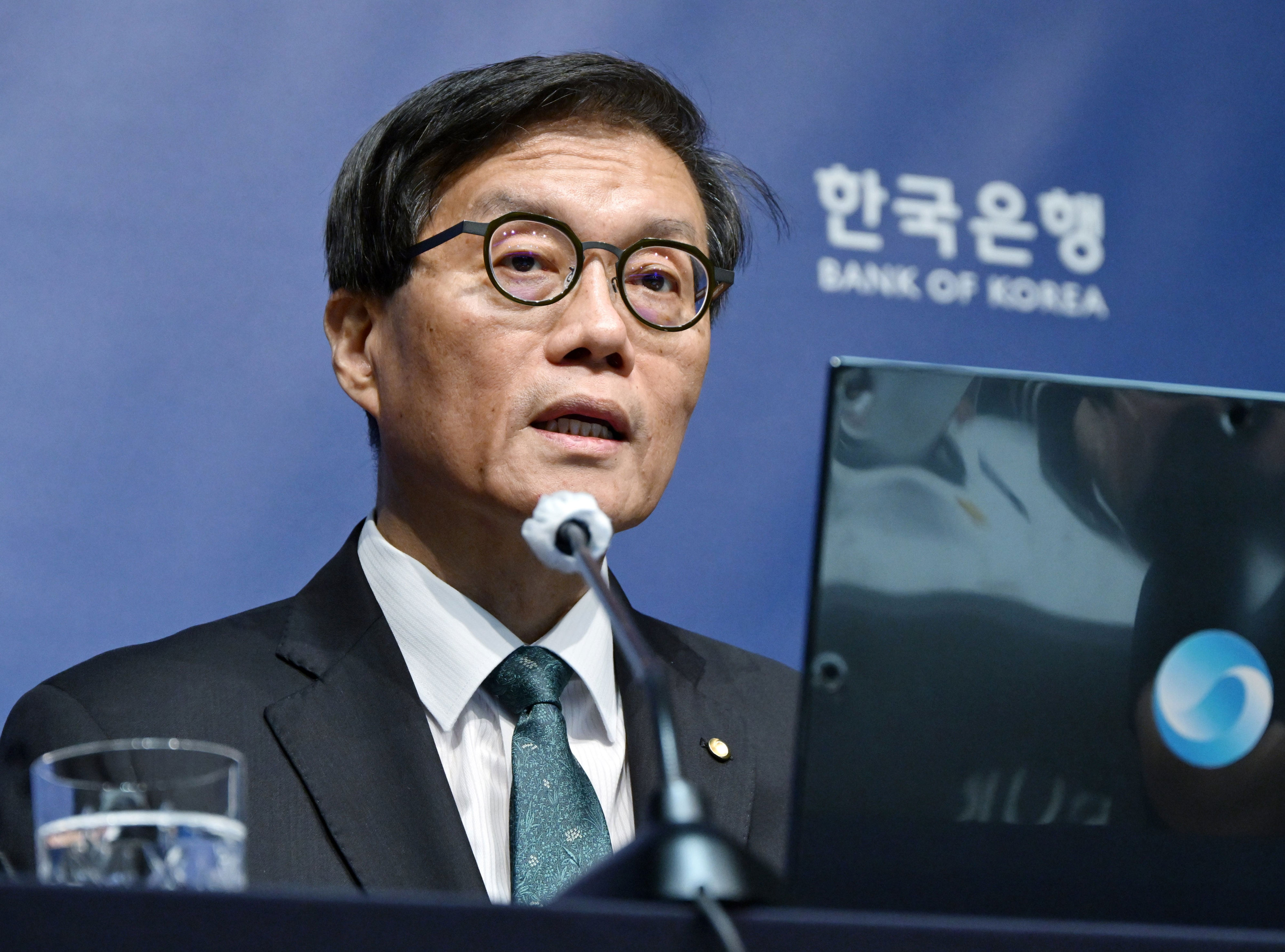
Government bond yields, which have followed a distinct upward movement since mid-last month, "stuck" again on the 12th, with BOK Governor Rhee Chang-yong acting as the catalyst. In an interview with Bloomberg TV released that day, Governor Rhee mentioned, "Considering the negative output gap, our official stance is to continue the easing monetary cycle. However, the extent and timing of any reduction or shift in direction will rely on the new data we observe."
His statement that a "shift in direction" might happen based on the November economic forecast was seen as an indication of potential interest rate increases, surprising the market by entirely eliminating any remaining possibility of rate reductions.
When foreigners sold bond futures after his comments, bond yields increased, and some of the money from bond sales was converted into dollars, creating a harmful cycle of increasing exchange rates.
Amidst the chaos in the bond and foreign exchange markets, the BOK took action to manage the consequences. Park Jong-woo, Deputy Governor for Monetary Policy at the BOK, explained, "Governor Rhee's statements do not indicate a change in monetary policy or any contemplation of interest rate increases." The Ministry of Economy and Finance also addressed the market, noting, "We are closely watching the sharp rise in government bond yields."
Domestic bond yields have already indicated potential risks because of the growing pressure from increased issuance. The government's budget for next year is 728 trillion Korean won, marking the first time it exceeds 700 trillion won. The volume of government bond issuance is 232 trillion won, which is also a new record. Out of this, the deficit bond issuance, excluding repayments, totals 110 trillion won.
Moreover, the pressure from bond issuances has intensified because of annual investment outflows of $200 billion to the U.S., along with the requirement to obtain funding for the expanded National Growth Fund, now set at 150 trillion won. An increase in bond issuance is expected to boost the supply of bonds in the market, resulting in declining bond prices (increasing yields).
Yoon Yeo-sam, a researcher from Meritz Securities, stated, “With the net rise in government bond issuance likely to stay significant for now, and policy-related issues like the National Growth Fund—akin to an additional budget—are increasing the supply load, the pressure on bond supply is bound to increase.”
Thus the article Foreign Investors Exit South Korean Bond Market
You are now reading the article Foreign Investors Exit South Korean Bond Market with the link addresshttps://www.unionhotel.us/2025/11/foreign-investors-exit-south-korean.html
0 Response to "Foreign Investors Exit South Korean Bond Market"
Post a Comment